Dark Spots After 40: What Actually Works, Answered Question by Question
Quick Answer: After 40, new dark spots are usually a mix of cumulative sun damage and hormonal shifts. Consistent daily SPF is the single most effective prevention step, while vitamin C, niacinamide, and gradual retinoid use are the best-supported treatments for spots that have already formed — most take 8-12 weeks to show visible fading.
Those new spots along your cheeks and forehead didn’t show up overnight, and they won’t fade overnight either — but the confusion about what actually works versus what’s just well-marketed makes this a genuinely frustrating skin concern to research.

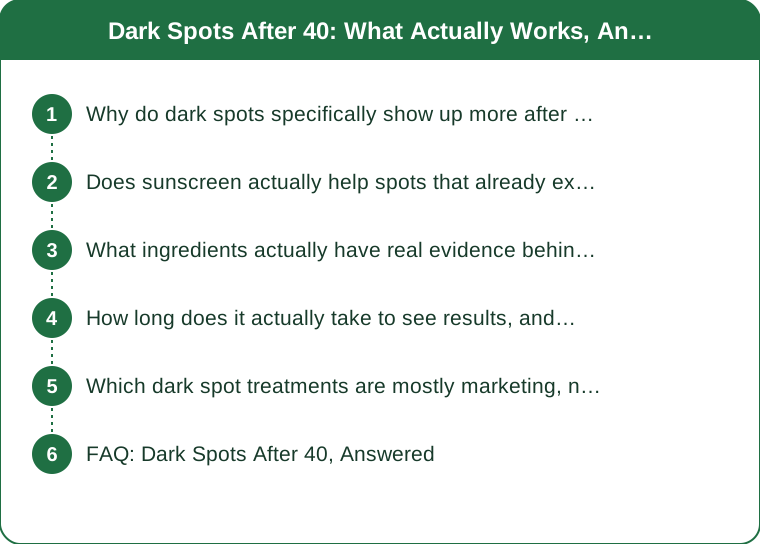
Why do dark spots specifically show up more after 40?
Two things compound at once: decades of cumulative UV exposure finally surfacing as visible pigmentation, and hormonal shifts around perimenopause that can trigger melasma-pattern pigmentation independent of sun exposure. This is why spots can appear even in people who’ve been diligent about sunscreen more recently — the damage often predates the habit.
Does sunscreen actually help spots that already exist, or just prevent new ones?
Both, meaningfully. Existing spots continue darkening with ongoing UV exposure, so consistent daily SPF (reapplied, not just applied once in the morning) is part of treating current spots, not only preventing future ones. Skipping sunscreen while using a treatment product actively undermines that product’s results.
What ingredients actually have real evidence behind them?
Vitamin C (look for 10-20% L-ascorbic acid or a stable derivative) has solid evidence for both brightening and additional sun protection support. Niacinamide (around 4-5%) reduces the transfer of pigment within skin cells with good tolerability even for sensitive skin. Retinoids, introduced gradually, speed up cell turnover and are one of the most consistently supported ingredients for fading existing hyperpigmentation over time.

How long does it actually take to see results, and what if nothing’s working?
Most well-supported ingredients need 8-12 weeks of consistent use before visible fading, which is longer than most people expect and a common reason people quit a product right before it would have worked. If there’s no change after 3-4 months of consistent, correctly-used treatment, that’s a reasonable point to see a dermatologist — some pigmentation (like deeper melasma) responds better to prescription-strength options or in-office treatments than over-the-counter products alone.
Which dark spot treatments are mostly marketing, not real evidence?
Lemon juice and other DIY acid treatments can actually cause irritation and rebound pigmentation, making spots worse rather than better. ‘Spot correctors’ with vague proprietary blends and no named active ingredient at an effective percentage rarely outperform a well-formulated vitamin C or niacinamide product at a fraction of the price.
FAQ: Dark Spots After 40, Answered
Can dark spots be a sign of something other than sun damage or hormones?
Occasionally — certain moles or spots that change shape, color, or size rapidly should be checked by a dermatologist, since that’s a different concern from typical sun- or hormone-related pigmentation.
Is it worth combining vitamin C and retinoids in the same routine?
Yes, commonly done — vitamin C in the morning under sunscreen, retinoid at night, is a standard, well-tolerated combination that addresses pigmentation from two different angles.
Do in-office treatments work faster than at-home products?
Often yes for stubborn spots — options like chemical peels or certain laser treatments can accelerate results, though they typically work best alongside, not instead of, consistent daily sunscreen and an active-ingredient routine at home.
TL;DR:
- New spots after 40 usually combine cumulative sun damage with hormonal shifts
- Daily reapplied SPF treats existing spots, not just prevents new ones
- Vitamin C, niacinamide, and gradual retinoid use have the strongest evidence
- Give any treatment 8-12 weeks before judging it — see a dermatologist if nothing changes after 3-4 months
This is general information, not medical advice — a dermatologist can rule out other causes and recommend prescription-strength options if over-the-counter routines plateau.
Keep Reading
This article is for general informational and styling purposes only. Fit, sizing, and product availability may vary.