What Changes in Your Skin When Summer Ends After 40
Quick Answer: After forty, the autumn skin transition hits harder because barrier function and natural oil production are already reduced, so the drop in humidity has less buffer to work against. The three changes that matter are a richer moisturiser, reduced exfoliation frequency, and continued sunscreen. Most people do the opposite of all three.
Here are the questions people actually ask about this, answered one at a time.
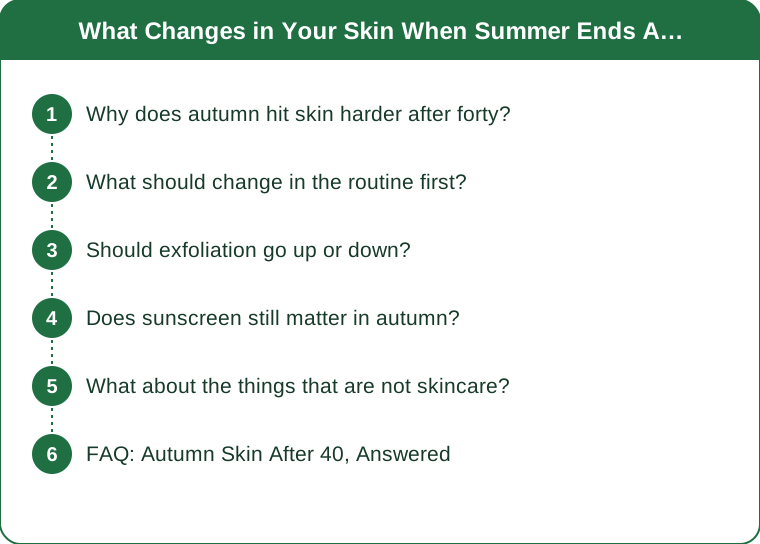
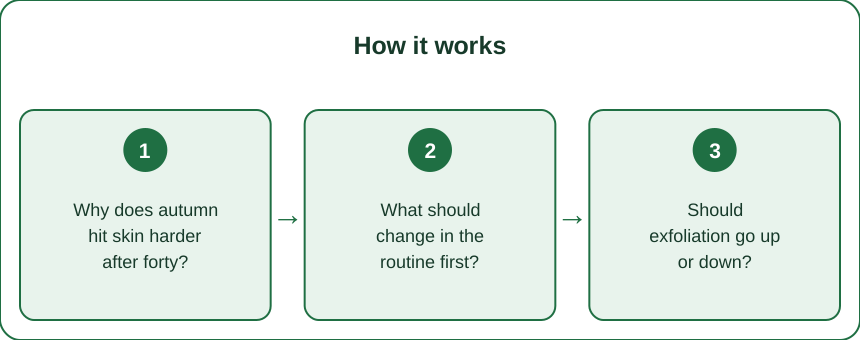
Why does autumn hit skin harder after forty?
Sebum production declines with age, and noticeably so after the mid-forties. Sebum is a significant part of what keeps the skin barrier sealed against water loss, so there is less natural protection against dry air than there was at thirty.
Barrier lipids decline too. Ceramides — the lipids that hold the outer skin layer together — reduce with age and with cumulative sun exposure. A weaker barrier means faster transepidermal water loss the moment humidity falls.
Cell turnover slows. What took about 28 days at twenty takes closer to 40-50 days after forty. Dead cells linger longer at the surface, which is why the autumn flakiness is more visible and more persistent.
The humidity drop is real and abrupt. Indoor relative humidity commonly falls from 55-60% in summer to 35-40% in early autumn, before heating even starts. Below about 40%, water loss from skin accelerates measurably.
And perimenopausal oestrogen changes compound all of it for many women in this age group — oestrogen supports collagen production, skin thickness, and hydration, and declining levels affect all three.
What should change in the routine first?
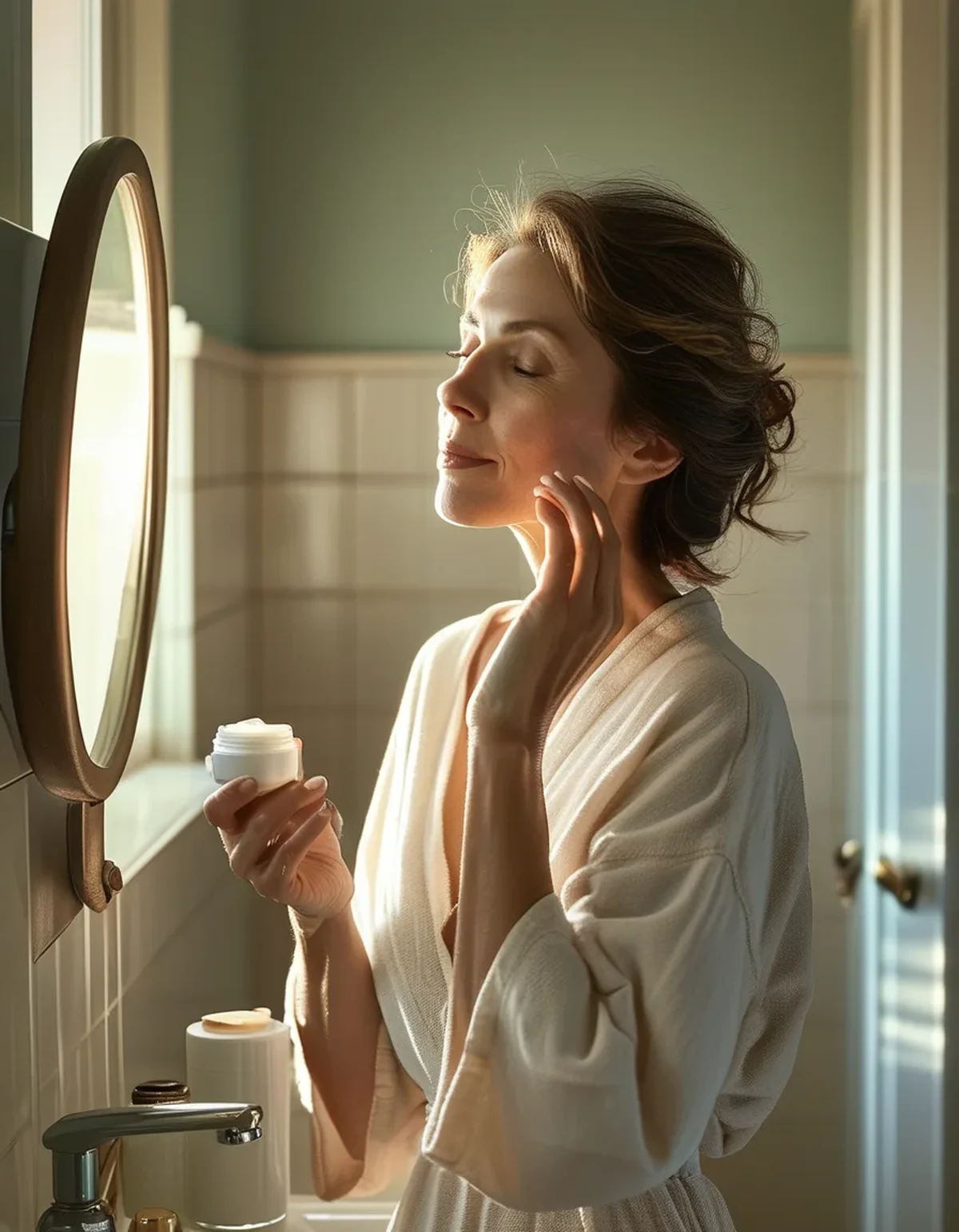
The moisturiser, and specifically its texture. A summer gel or lotion should move to a cream. The most useful ingredients to look for are ceramides, which replace what the barrier is losing, and glycerin or hyaluronic acid to draw water in — but humectants alone in dry air can pull moisture from the skin rather than the environment, so they need an occlusive layer over them.
Apply to damp skin. Within about sixty seconds of washing, while the surface still holds water. This single timing change does more than most product upgrades.
Add an occlusive at night if you are genuinely dry. A thin layer of something containing petrolatum, squalane, or shea over your usual moisturiser reduces overnight water loss substantially. It is unglamorous and it works better than almost anything else.
Reduce cleansing intensity. A foaming cleanser that was fine in humid August strips more than skin can afford in October. A cream or oil cleanser is the seasonal swap.
Lukewarm water, not hot. Hot water removes barrier lipids directly, and the instinct to raise the shower temperature arrives at exactly the wrong moment.
Should exfoliation go up or down?
Down, almost always — and this is the most common mistake of the season.
Flaking looks like it needs scrubbing. It does not. Autumn flaking is a barrier problem, and exfoliating a compromised barrier makes it worse in a cycle that people can stay stuck in for months.
Halve the frequency and see. If you were using an acid three times a week in summer, drop to once or twice. If you were using a retinoid nightly, consider every other night through the transition weeks.
Choose lactic over glycolic in autumn. Lactic acid is a larger molecule, penetrates less aggressively, and has mild humectant properties of its own.
Do not stop retinoids entirely. They remain the best-evidenced topical for ageing skin. Reduce frequency, apply over a moisturiser rather than under one if irritation appears, and build back up once the skin adapts.
Give it two weeks before judging. Barrier recovery is not instant, and people typically abandon the reduced schedule at day four, right before it starts working.
Does sunscreen still matter in autumn?
Yes, and this is the question with the biggest gap between what people believe and what is true.
UVA does not drop the way UVB does. UVB — which causes burning — falls substantially in autumn. UVA — which drives photoageing, pigmentation, and collagen breakdown — remains far more constant through the year and penetrates cloud and window glass.
Pigmentation from the summer surfaces in autumn. Melasma and sun spots often look worse in September and October than in August, because pigment produced over the summer continues migrating to the surface. Stopping sunscreen at that exact moment makes it durable.
Daily use is the single most evidence-backed anti-ageing habit available, and it is more consequential than any serum in the routine.
Texture can change with the season. A summer fluid or gel can move to a moisturising SPF cream, which solves two steps at once and makes daily use realistic.
Reapplication matters less indoors — window glass blocks most UVB but only some UVA, so a single morning application is reasonable for a mostly indoor day, while outdoor time still needs topping up.
What about the things that are not skincare?
Indoor humidity is the underrated variable. A humidifier in the bedroom, kept around 45-50%, does more for winter skin than most product changes. Heating is the largest single driver of indoor dryness and it starts in the next few weeks.
Water intake matters less than people think, and not zero. Severe dehydration affects skin; drinking beyond adequate intake does not add benefit. It is worth getting right and not worth obsessing over.
Sleep affects barrier recovery directly. Skin barrier repair happens predominantly overnight, and shortened sleep measurably slows it.
Dietary fat is genuinely relevant. Very low-fat diets are associated with drier skin, and essential fatty acids contribute to barrier lipids.
Persistent changes deserve a professional opinion. New or changing moles, persistent redness, itching that disrupts sleep, or dryness that does not respond to a richer routine within a few weeks should be seen by a dermatologist or GP. Perimenopausal skin changes are also worth discussing with a clinician rather than managing entirely through products. This is general information, not medical advice.
FAQ: Autumn Skin After 40, Answered
Should I switch to a completely different product line for autumn?
No. Change the moisturiser and the cleanser, reduce exfoliation, and keep everything else. Changing many products at once means you cannot tell what worked.
Is facial oil a good addition?
Often yes, over moisturiser rather than instead of it. Oils are occlusive rather than hydrating, so they seal in water that something else provided.
Why does my skin sting when I apply products it tolerated in summer?
That is a barrier signal. Stop actives for a week, use a simple ceramide moisturiser, and reintroduce slowly. Stinging is not products ‘working’.
How long does the transition take?
Most people settle within two to three weeks of adjusting the routine. Skin that is still deteriorating at week four is worth getting looked at.
TL;DR:
- Reduced sebum, fewer barrier lipids, and slower turnover mean less buffer against the autumn humidity drop after forty.
- Move to a ceramide-rich cream, apply to damp skin within sixty seconds, and add an occlusive at night if dry.
- Cut exfoliation frequency in half — flaking is a barrier problem, not a build-up problem.
- Keep sunscreen daily; UVA barely drops and summer pigmentation surfaces now.
- A bedroom humidifier at 45-50% does more than most product upgrades once heating starts.
The autumn instinct is to scrub more and moisturise the same. Doing the reverse is most of the answer.
Keep Reading
This article is for general informational and styling purposes only. Fit, sizing, and product availability may vary.