The Makeup Pivot: What Works Differently After 40
Quick Answer: Four shifts do most of the work. Swap powder blush, bronzer, and highlight for cream versions applied with your fingers. Use less base — a skin tint or sheered foundation instead of full coverage. Soften eyeliner into a smudged shadow-liner and switch to brown mascara on curled lashes. And treat prep as part of the makeup: damp, well-moisturized skin makes everything above it perform better.
Somewhere after 40, the makeup that served you for two decades starts filing complaints.
Powder settles into places it never used to. Liner migrates by lunchtime. The full-coverage foundation that used to hide everything now seems to add five years instead of removing them.
Nothing failed. The canvas changed — skin holds less water, produces less oil, and has more texture than it did — and the technique pivots with it. Here’s the pivot, and the last one is the shift most people underrate.
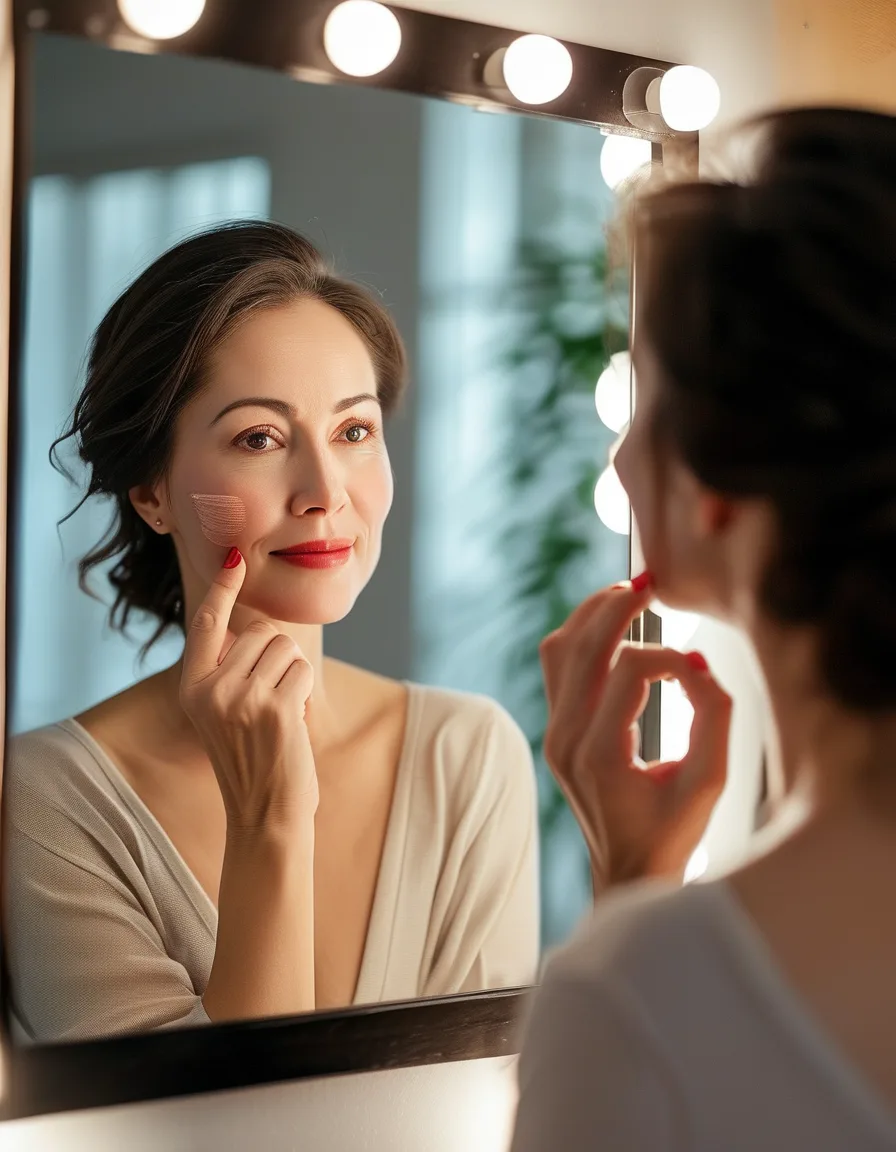
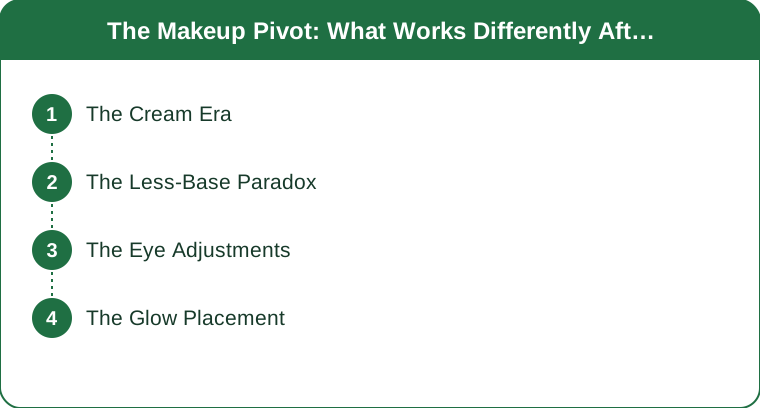
Why Does Makeup Sit Differently After 40?
Three changes in the skin explain nearly everything.
Less oil production. Sebum drops meaningfully with age, particularly after menopause. Powder was designed to absorb oil — with less oil to absorb, it sits on the surface instead of melting in.
More texture. Fine lines, larger visible pores, and slight unevenness give powder somewhere to collect. Powder settles into texture and announces it.
Less water retention in the skin. Drier skin grabs at product, which is why the same foundation that glided on ten years ago now drags and looks patchy.
So the fix isn’t different products in the same categories. It’s a different format — anything that melts rather than sits.
The Cream Era
The single highest-impact change: swap powder cheek products for cream ones.
Cream blush melts into skin and blurs texture instead of highlighting it. Apply to the apples and blend up toward the temple.
Cream or liquid bronzer does the same job with warmth. Powder bronzer is the worst offender for emphasizing texture across the cheekbone.
Cream or liquid highlight rather than a pressed powder with visible sparkle. More on placement below.
Apply with fingers. This isn’t a shortcut — your fingers’ warmth softens the product and helps it melt into skin in a way a brush doesn’t. Warm it on the back of your hand first, then press and tap it on rather than dragging.
Powder survives as targeted diplomacy only. A light dusting on the T-zone or wherever you actually get shine, applied with a small brush. Not an all-over setting layer.
The Less-Base Paradox
This is the counterintuitive one, and it’s the shift that changes the most.
Heavy foundation settles into lines and adds years. The fix is less coverage, not more.
Skin tints or sheered foundation. A tinted moisturizer, a skin tint, or your usual foundation mixed with a drop of moisturizer or facial oil. You want evenness, not opacity.
Concealer only where you need it. Under the inner corner of the eye, on any specific spot. Not a full under-eye triangle, which is where creasing lives.
Apply thin and press in. A damp sponge, pressing rather than wiping. Pressing pushes product into the skin; wiping moves it around on top.
Set almost nothing. A tiny amount of finely milled powder under the eyes at most, and only if you crease. Setting the whole face is what makes it look flat.
The principle underneath all of it: skin showing through reads younger than skin painted over. A little unevenness that’s clearly real skin looks better than a smooth, opaque surface that clearly isn’t.
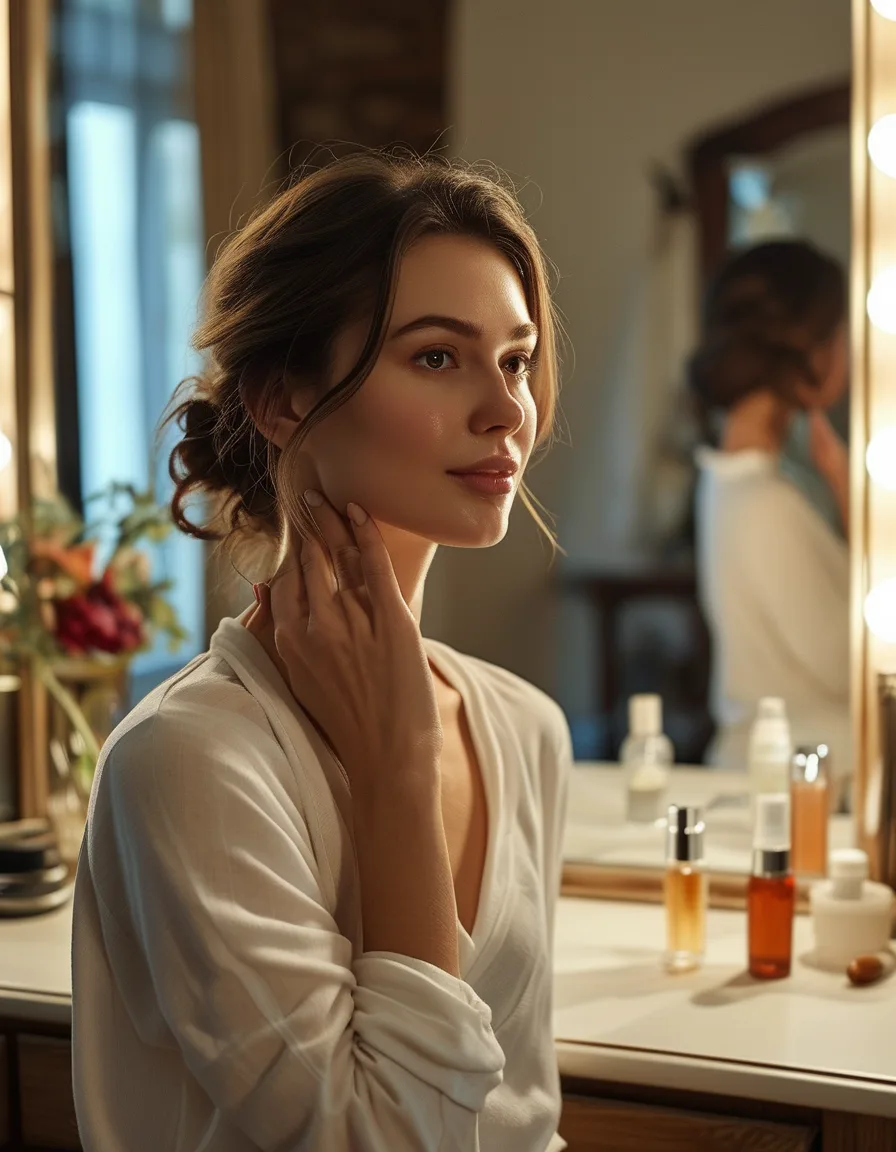
The Eye Adjustments
Three changes here, all in the direction of softer.
Liner softens from a hard line to a smudged shadow-liner. Take a dark eyeshadow on a small angled brush and press it into the lash line, then soften the edge. It’s migration-proof in a way pencil and liquid aren’t on softer lids, and a diffused line is more flattering than a hard one against skin with any texture.
Curl lashes and switch to brown mascara. Curling opens the eye more than any amount of product. Brown gives you definition without the harsh contrast that black creates against fairer or more delicate skin. If black is your preference, use it on the upper lashes only.
Brows are the structural comeback. Brows thin quietly and gradually, and most people don’t notice until they look at an old photo. A brow gel with fiber, plus light feathered strokes to fill gaps, restores frame to the whole face. This is often the single change that makes the biggest difference, and it takes 40 seconds.
One more: skip heavy shadow in the crease if your lid has softened. A wash of a mid-tone across the whole lid, with definition at the lash line, sits better than a defined crease that lands in a different place than it used to.
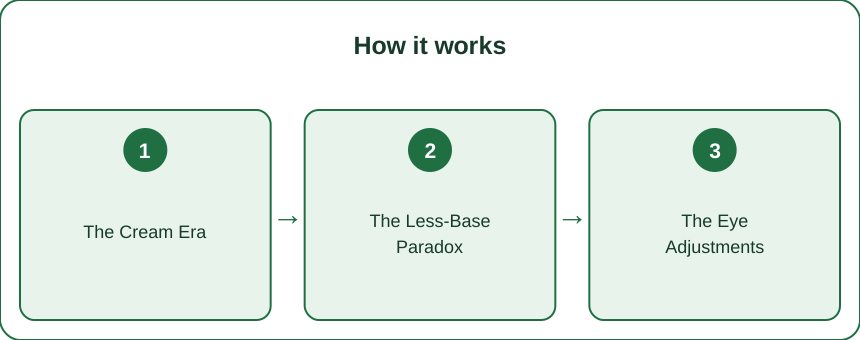
The Glow Placement
Highlight moves from cheekbone-top glitter to something subtler and higher.
Where: high on the cheekbone toward the temple, on the inner corner of the eye, and a touch on the brow bone. Not along the full length of the cheekbone, which is where texture lives.
What: a cream or liquid with a soft sheen, not visible sparkle. Anything with glitter particles catches on texture and does the opposite of what you want.
How much: less than you think. Glow after 40 means “looks hydrated,” not “looks metallic.”
And the real trick is prep. Makeup after 40 is roughly 60% skincare underneath. Moisturize and let it absorb for a few minutes before base. A hydrating serum or a facial oil pressed in first makes every product above it perform noticeably better — foundation glides instead of dragging, cream blush blends instead of grabbing.
Applying makeup to damp, plump skin versus dry skin is genuinely the difference between two different results with identical products.
Myth vs Fact
Myth: You should wear less makeup as you get older. Fact: You should wear different makeup. The amount is up to you; the formats and placement are what actually need to change.
Myth: Matte foundation looks more polished. Fact: Matte finishes emphasize texture on drier skin. A satin or natural finish reads more polished and more current.
Myth: Bold lipstick ages you. Fact: A strong lip is one of the most effective and modern things you can wear at any age. What can age a look is a hard, over-lined lip line — soften the edges and it works.
Myth: You need special “mature skin” products. Fact: You need cream formats, lighter coverage, and good hydration. Most of the products that deliver those aren’t marketed by age at all.
Mini FAQ
What foundation is best for mature skin?
A hydrating, light-to-medium coverage formula with a satin or natural finish — skin tints and serum foundations work particularly well. Avoid full-coverage matte formulas, which emphasize texture and settle into lines. Applying with a damp sponge, pressed rather than dragged, matters as much as the product choice.
Should you stop wearing powder after 40?
Not entirely, but use far less and only where you shine — usually the T-zone. Skip all-over setting powder, which flattens the finish and collects in texture. A finely milled translucent powder in a small area is all most people need.
How do you keep eyeliner from migrating on mature eyelids?
Switch from pencil or liquid to a dark eyeshadow pressed into the lash line with a small angled brush. Powder shadow doesn’t move the way waxy or wet formulas do on softer lids, and a slightly diffused line is more flattering anyway. A thin eye primer underneath helps further.
TL;DR:
- Creams over powders — blush, bronzer, highlight — applied with warm fingers, pressed not dragged.
- Less base, not more. Skin tint or sheered foundation, targeted concealer, minimal setting.
- Soften liner into smudged shadow-liner; curl lashes; brown mascara; fill the brows.
- Glow means hydrated, not metallic. Place it high and use less than you think.
- 60% of the result is skincare underneath — moisturize, let it absorb, then apply.
The pivot isn’t about hiding anything. It’s technique catching up to a canvas that wants blur, not spackle — and the mirror confirms it within one morning.
Keep Reading
This article is for general informational and styling purposes only. Fit, sizing, and product availability may vary.