Neck and Chest Skincare After 40: What Actually Works
Quick Answer: Neck and chest skin is thinner, has fewer oil glands, and repairs itself more slowly than facial skin - and for most women it has also received decades less sunscreen. The evidence-backed routine is an extension, not an expansion: bring your existing SPF, retinoid, and moisturizer down to the neckline, at gentler frequency for the actives. Dedicated neck creams mostly repackage the same ingredients at a higher price per ounce. For chest creases specifically, sleep position is a bigger lever than any cream.
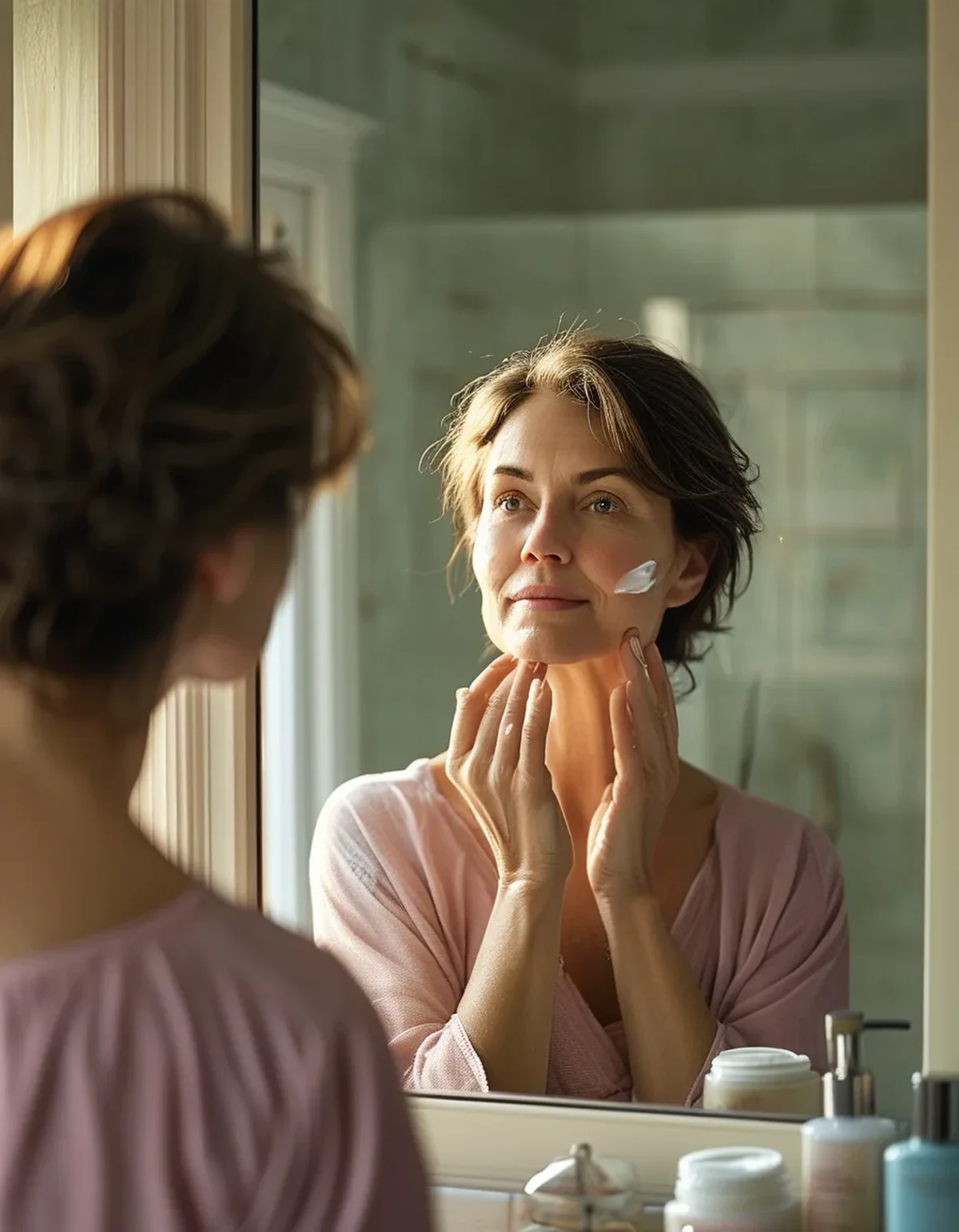
The face gets a five-product routine and daily SPF; the neck gets whatever is left on the palms, and the chest gets nothing but July sun. Twenty years of that arithmetic is why the jawline has become a visible boundary - and why the fix starts with erasing the boundary, not buying a sixth product.

Why do the neck and chest age differently from the face?
Four structural reasons, one historical one.
The skin is genuinely different tissue. The neck and chest have a thinner dermis, fewer sebaceous glands, and fewer follicles than the face. Less oil means a weaker lipid barrier, faster water loss, and slower recovery from irritation - the same retinoid your face shrugs off can leave the neck red for days.
It moves constantly. The neck folds, rotates, and creases thousands of times a day, and the downward phone gaze added hours of repetitive flexion that previous decades did not have. Repeated folding along the same lines is exactly how horizontal neck bands deepen - the tech-neck effect is mechanical, and it is real.
The chest takes sun at a brutal angle. The decolletage is nearly horizontal to midday summer sun, and necklines expose it in exactly the months when UV is strongest. The mottled pigment, crepey texture, and visible vessels that show up in the 40s are overwhelmingly photoaging - accumulated UV, not birthdays.
Side sleeping folds the chest all night. The vertical cleavage creases many women notice by morning are compression wrinkles from hours of one shoulder rolling toward the other. They start as temporary and, over years, the folding trains in a permanent line - same mechanism as a sleep-creased cheek, larger canvas.
And the historical reason: decades of SPF that stopped at the jaw. Nearly everyone protected the face first and best. The neck and chest logged twenty-plus years of incidental, unprotected exposure, which is why they often look older than the face they sit beneath - they are not aging faster now, they were protected less then.
What should the routine actually be?
Extend, do not multiply. Everything below uses products already on the shelf.
Step one, worth more than everything else combined: SPF to the neckline, every morning. The same broad-spectrum sunscreen the face gets, carried down the neck and across whatever the day’s neckline exposes. Two extra fingertips of product, ten extra seconds. Photoaging is the dominant cause of neck and chest complaints, and this is the intervention that addresses cause rather than symptom.
Step two: moisturizer down to the chest, on damp skin. Fewer oil glands means this area needs the lipid help more than the face does. A ceramide-and-humectant moisturizer - the one already in the bathroom - applied within a minute of showering, while skin is still damp, measurably improves how much water stays in.
Step three: the retinoid, at half frequency. Retinoids are the best-evidenced topical for texture and fine lines, and they work on the neck and chest - but thin, dry skin gets irritated faster. Start once or twice a week, buffer by applying moisturizer first, and build slowly. The neck does not need the face’s schedule; it needs consistency at a dose it tolerates.
Step four: nothing abrasive. No scrubs, no aggressive acids stacked on retinoid nights, no treating crepey texture as something to sand off. Thin skin punishes enthusiasm.
Optional but sensible: vitamin C in the morning under SPF, extended down from the face routine for pigment and antioxidant support - same product, wider territory.
The pattern is obvious by now: the neck routine is the face routine with the map redrawn. The skin barrier is weaker, so frequency drops; the sun exposure was worse, so SPF matters more. No new products have entered the room.
Myth vs Fact: Neck Creams and Chest Wrinkles
Myth: You need a dedicated neck cream. Fact: Read the ingredient list on any neck cream and you will find the same peptides, humectants, and occlusives as the face moisturizer next to it - frequently at a higher price for a smaller tube. The neck needs the ingredients, not the label. The money is better spent on a bigger tube of the moisturizer that already works.
Myth: Firming creams tighten sagging. Fact: The instant-firming effect is a film of polymers that tightens as it dries - real, visible, and gone at the next wash. Genuine improvement in laxity comes from retinoids over months, sun protection over years, and in-office procedures for larger changes. Anything promising a lifted neck in a jar is describing the film.
Myth: After 50 it is too late to start. Fact: Retinoids and sunscreen improve texture, pigment, and fine lines at any starting age - the studies that established them included older skin. The slope changes, not the direction. Too late is a marketing frame from the same industry that sold too early.
Myth: Tech neck lines are just posture, so skincare is pointless. Fact: The horizontal bands are mechanical, but how visibly they read is heavily influenced by skin quality - hydrated, retinoid-conditioned skin shows the same fold less. Posture breaks help the cause; skincare softens the evidence. Both, not either.
Myth: Chest wrinkles mean it is time for an expensive serum. Fact: For the vertical sleep creases, position is the lever: back sleeping, or a body pillow that keeps the top shoulder from rolling over. Silicone chest patches have devoted fans and thin evidence - plausible as overnight anti-folding splints, unproven beyond that. Free beats forty dollars when the mechanism is folding.
What is worth money here - and what is not?
A short honest ledger.
Worth it, tier one: sunscreen you will actually reapply. If the neckline is out all day, the morning application quit by lunch. A stick or spray that makes the 1 p.m. top-up realistic is the highest-value purchase in this entire category.
Worth it, tier two: the retinoid already proven on your face, extended down at gentle frequency. And a real pillow experiment - two weeks of back-sleeping or a body pillow costs nothing and answers the chest-crease question for your specific face-down tendencies.
Situational: professional treatments. For established laxity, deep bands, or pigment that topicals will not move, in-office options - lasers, radiofrequency, microneedling, and others - have real evidence, real costs, and real variation by skin type. That conversation belongs with a board-certified dermatologist, not a product page. Going once for an assessment beats years of forty-dollar experiments.
Mostly not worth it: the dedicated neck-cream aisle. Same actives, smaller tubes, prettier verbs. Also mostly not worth it: anything abrasive sold for crepey texture, and any device or cream whose before-and-after relies on lighting.
The habit stack that costs nothing: SPF to the neckline daily, moisturizer to the chest after every shower, retinoid twice a week, phone raised to eye level for long scrolls, and a pillow setup that does not fold your chest in half for eight hours.
One flag worth stating plainly: new, changing, or itching spots on chronically sun-exposed chest and neck skin deserve a professional look - this is high-mileage territory. A skin check appointment outranks every product in this article.
This is general information, not medical advice.
FAQ: Neck and Chest Skincare Questions, Answered
Do neck creams actually work?
The ingredients work - peptides, retinoids, ceramides, and sunscreen all have evidence. The dedicated-neck-cream format is the part that does not hold up: it is usually the same formula logic as a face moisturizer at a worse price per ounce. Extend what you own downward and spend the difference on sunscreen you will reapply.
How do I fix the vertical wrinkles on my chest from sleeping?
Reduce the folding: sleep on your back if you can train it, or hug a body pillow that stops the top shoulder from rolling across. Silicone patches act as overnight splints and some women find them useful, though evidence is thin. Meanwhile retinoid-plus-SPF improves the skin quality the creases show through.
Can I use my retinol on my neck and chest?
Yes, and it is one of the best-evidenced moves available - at reduced frequency. Start once or twice weekly, buffer with moisturizer underneath, and accept that the neck builds tolerance slower than the face. If persistent redness or stinging shows up, drop frequency rather than quitting.
Is it too late to start neck skincare in my 50s?
No. Sunscreen stops ongoing damage the day it starts, and retinoids improve texture and fine lines on skin of any age - improvement just arrives gradually, over months. The only version of too late is the one where the routine never starts.
TL;DR:
- Neck and chest skin is thinner, drier, and got decades less SPF - it is behind, not different.
- Extend the existing routine down: SPF to the neckline daily, moisturizer to the chest, retinoid at half frequency.
- Dedicated neck creams repackage face-moisturizer ingredients at worse prices - skip the aisle.
- Chest sleep-creases are a folding problem; position and pillows outrank serums.
- New or changing spots on this high-sun territory go to a dermatologist, not a product page.
The jawline boundary was never in the skin. It was in the routine - and it disappears the week the routine does.
Keep Reading
This article is for general informational and styling purposes only. Fit, sizing, and product availability may vary.