The Skin Changes Perimenopause Causes That Skincare Alone Can't Fully Fix
Skin changes that show up during perimenopause get treated like a skincare-routine failure, prompting a cycle of new products and disappointment. Some of what’s happening is genuinely responsive to topical adjustment, but a meaningful part of it is hormonally driven in ways no serum fully reverses, and knowing which is which changes what’s worth spending on.

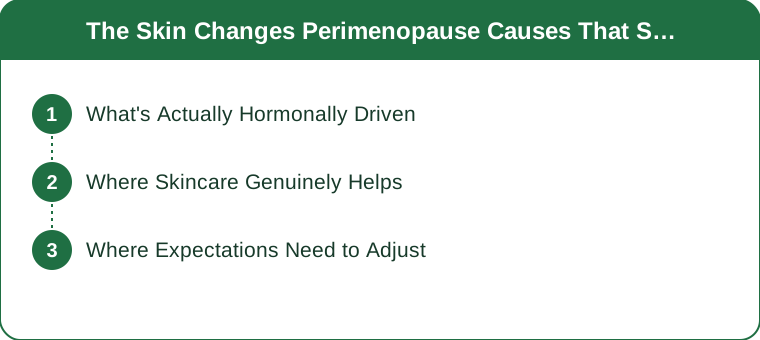
What’s Actually Hormonally Driven
The biological root: the the-collagen-decline-accelerates (the estrogen decline during perimenopause directly correlating with an accelerated rate of collagen loss, per general dermatological-endocrinology research, distinct from normal age-related collagen decline alone), the the-oil-production-shifts-unpredictably (the sebum production becoming less predictable during the hormonal transition, sometimes producing dryness and breakouts in the same period), the the-skin-barrier-function-weakens (the declining estrogen affecting skin barrier lipid production, making skin more reactive and prone to irritation than it was previously).

Where Skincare Genuinely Helps
The responsive layer: the the-barrier-support-ingredients (the ceramide and fatty-acid-focused moisturizers directly addressing the weakened barrier function, a targeted rather than generic fix), the the-retinoid-support-for-collagen (the retinoids having genuine, research-supported collagen-stimulating effects that can partially offset the accelerated decline), the the-consistent-spf-non-negotiable (the sun protection mattering more during this window since a weakened barrier and declining collagen compound UV damage effects).
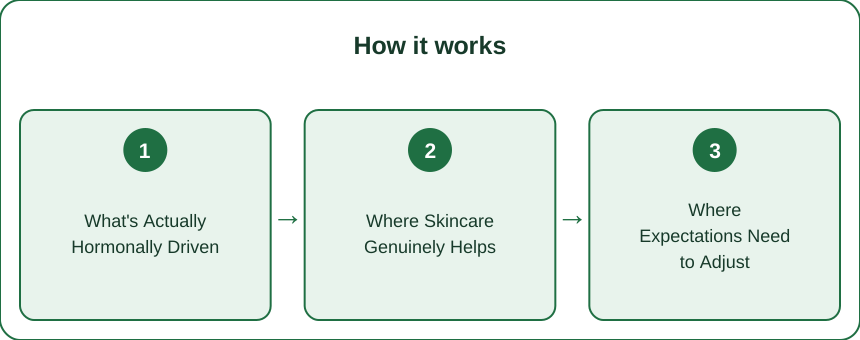
Where Expectations Need to Adjust
The honest limit: the the-topicals-dont-replace-estrogen (the topical products having no ability to restore estrogen levels themselves, meaning some changes are outside skincare’s reach entirely), the the-hormone-therapy-is-a-medical-conversation (the hormone-related skin changes sometimes being addressed more directly through hormone therapy, a decision for a doctor rather than a skincare aisle), and the frame (skincare adjustments help the responsive layer; the hormonal layer underneath needs a different, medical conversation)).
Perimenopause skin changes don’t always mean the existing skincare routine is failing — a meaningful part of what’s happening is hormonally driven and sits outside what any topical product can fully reverse. Declining estrogen accelerates collagen loss beyond normal age-related decline, destabilizes oil production in ways that can produce dryness and breakouts in the same stretch, and weakens the skin barrier’s lipid production, making skin more reactive than before. Skincare genuinely helps the responsive layer of that — barrier-support ingredients like ceramides, retinoids for their real collagen-stimulating effect, and consistent SPF given how much more UV damage compounds during this window. But topical products can’t restore estrogen itself, and some of what’s changing is a conversation better had with a doctor about hormone therapy than solved with a new serum. Matching expectations to which layer is actually responsive prevents a lot of wasted product spend. The Skin Changes Perimenopause Causes That Skincare Alone Can’t Fully Fix.
Keep Reading
This article is for general informational and styling purposes only. Fit, sizing, and product availability may vary.