Retinol Purging or Just Breaking Out From It: The After-40 Version of This Question
General retinol purging advice gets written for skin broadly, without accounting for the fact that skin over 40 responds somewhat differently in ways that change how to interpret an early breakout after starting a new retinol product. Here is what specifically changes at this stage and what to actually watch for. This is general information, not medical advice.

The Age-Related Factors That Change the Picture
What’s genuinely different: the the-skin-barrier-function-changes-with-age-affecting-both-purging-and-irritation-risk-simultaneously (the skin barrier’s natural function and repair capacity shifting with age, per the skincare-over-40-guide logic, meaning both the purging process itself and the risk of genuine irritation are affected by the same underlying age-related change, making the two harder to cleanly distinguish than in younger skin — the the-same-underlying-barrier-change-affects-both-purging-and-irritation-risk-simultaneously-making-them-harder-to-cleanly-separate-in-older-skin), the the-slower-cell-turnover-baseline-means-the-purging-timeline-itself-may-run-somewhat-longer (the naturally slower baseline cell turnover rate with age potentially extending how long a genuine purging process takes to resolve compared to younger skin’s faster baseline turnover, meaning the standard four-to-six-week purging window discussed for general skin may need some upward adjustment — the naturally-slower-baseline-cell-turnover-may-extend-the-realistic-purging-timeline-somewhat-beyond-the-standard-window-discussed-for-general-skin), the the-concurrent-use-of-other-anti-aging-actives-common-at-this-life-stage-adds-a-real-confounding-variable (the skincare routines at this life stage often already including other actives — vitamin C, other exfoliants — per the anti-aging-skincare-ingredients-that-work-guide logic, adding a genuine confounding variable that makes isolating retinol’s specific effect harder than in a simpler younger-skin routine — the concurrent-use-of-other-actives-common-at-this-stage-genuinely-complicates-isolating-retinols-specific-effect), and the frame (the age-related factors as barrier changes affecting both purging and irritation risk together, a potentially longer realistic purging timeline given slower baseline turnover, and a real confounding variable from concurrent other actives common in routines at this stage — genuine reasons this specific question plays out somewhat differently after 40).

What to Actually Watch For
The practical distinguishing approach: the introduce-retinol-in-isolation-first-before-adding-other-new-actives-simultaneously (the starting a new retinol product without simultaneously introducing other new actives specifically to make cause-and-effect actually assessable, given how much concurrent actives complicate interpretation at this stage — the introducing-retinol-in-isolation-first-is-especially-important-at-this-life-stage-given-how-much-concurrent-actives-otherwise-complicate-interpretation), the the-extend-the-patience-window-somewhat-given-the-likely-longer-realistic-purging-timeline (the giving genuine purging a somewhat longer benefit-of-the-doubt window than the standard four-to-six-week guideline, given the plausible extension from slower baseline cell turnover, before concluding it’s a bad reaction rather than purging — the extending-the-patience-window-somewhat-beyond-the-standard-guideline-accounts-for-the-plausible-slower-turnover-related-timeline-extension), the the-pay-closer-attention-to-barrier-support-throughout-since-the-same-age-related-change-affecting-purging-also-raises-irritation-risk (the being more proactive about barrier-supporting products throughout the introduction period, since the same age-related barrier change that may extend the purging timeline also genuinely raises the risk of true irritation, per the retinol-over-40-guide logic — the being-more-proactive-about-barrier-support-throughout-is-warranted-given-that-the-same-underlying-change-raises-both-the-purging-timeline-and-the-genuine-irritation-risk-simultaneously), and the transition (the practical approach as introducing retinol in isolation, extending the patience window somewhat, and paying closer attention to barrier support — with one clear signal that should end the wait-and-see period regardless of timeline).
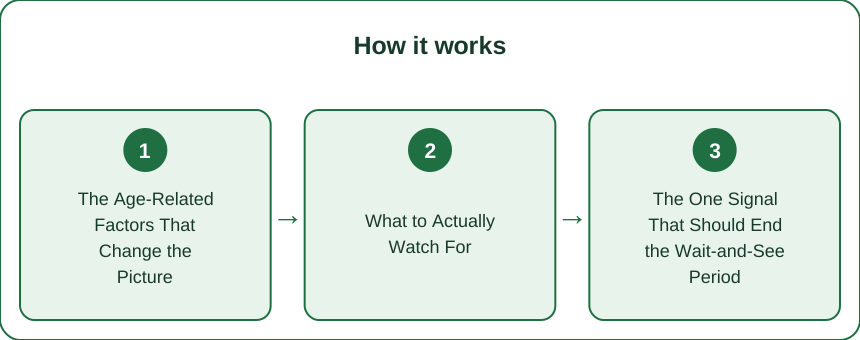
The One Signal That Should End the Wait-and-See Period
When to stop waiting it out: the the-worsening-rather-than-plateauing-or-improving-trend-past-the-extended-window-is-the-clearest-signal-its-not-purging (the actual trend direction mattering more than any fixed timeline — genuine purging should be gradually plateauing or improving by the extended window discussed above, and a pattern that keeps actively worsening past that point, rather than holding steady or easing, is the clearest signal it’s a reaction rather than a purge, per the hormonal-skin-changes-forties-guide logic — the a-continued-worsening-trend-past-the-extended-window-rather-than-plateauing-or-improving-is-the-clearest-signal-something-other-than-normal-purging-is-happening), and the frame (the one clear stopping signal as an actively worsening trend past the extended patience window, rather than any specific fixed number of weeks — trend direction, not a calendar date, is what should actually end the wait-and-see period. This is general information, not medical advice.)
The purging-versus-reaction question plays out somewhat differently on skin over 40 because the same age-related change in skin barrier function affects both the purging process and genuine irritation risk simultaneously, making the two harder to cleanly distinguish than in younger skin, naturally slower baseline cell turnover may extend the realistic purging timeline somewhat beyond the standard four-to-six-week window typically discussed, and routines at this life stage often already include other actives like vitamin C or additional exfoliants that genuinely complicate isolating retinol’s specific effect. The practical approach is introducing a new retinol product in isolation before adding other new actives simultaneously, extending the patience window somewhat given the plausibly longer realistic purging timeline, and paying closer attention to barrier-supporting products throughout the introduction period. The clearest signal to actually stop waiting it out is trend direction rather than any fixed calendar date — genuine purging should be plateauing or improving by the extended window, and a pattern that keeps actively worsening past that point points to a reaction rather than a purge. This is general information, not medical advice.
Keep Reading
This article is for general informational and styling purposes only. Fit, sizing, and product availability may vary.